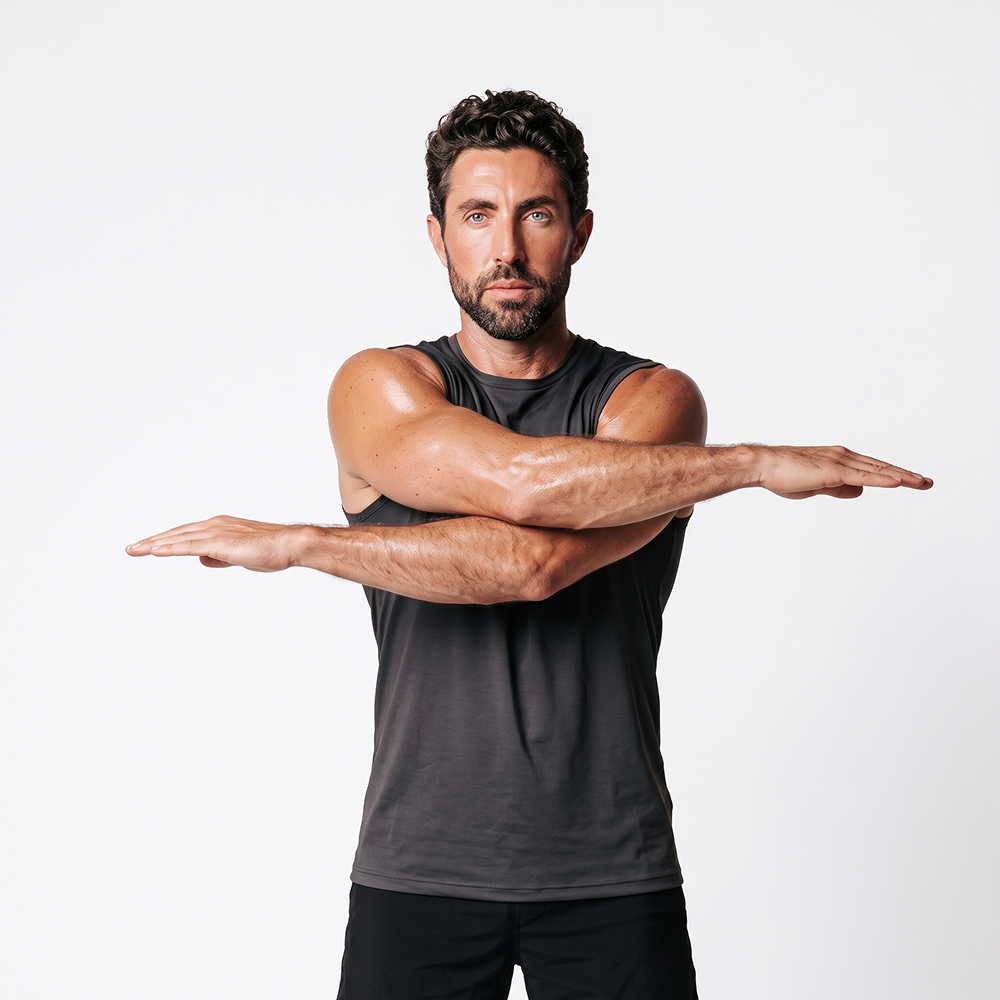
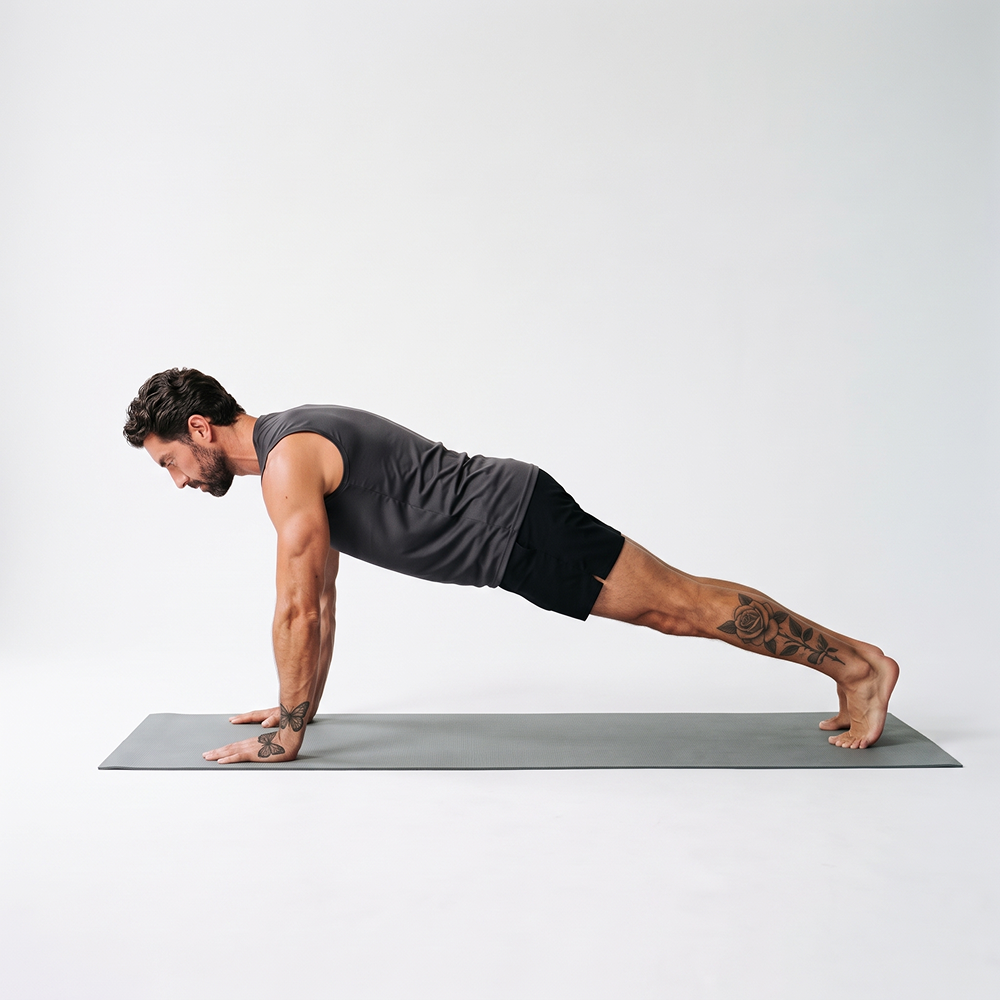
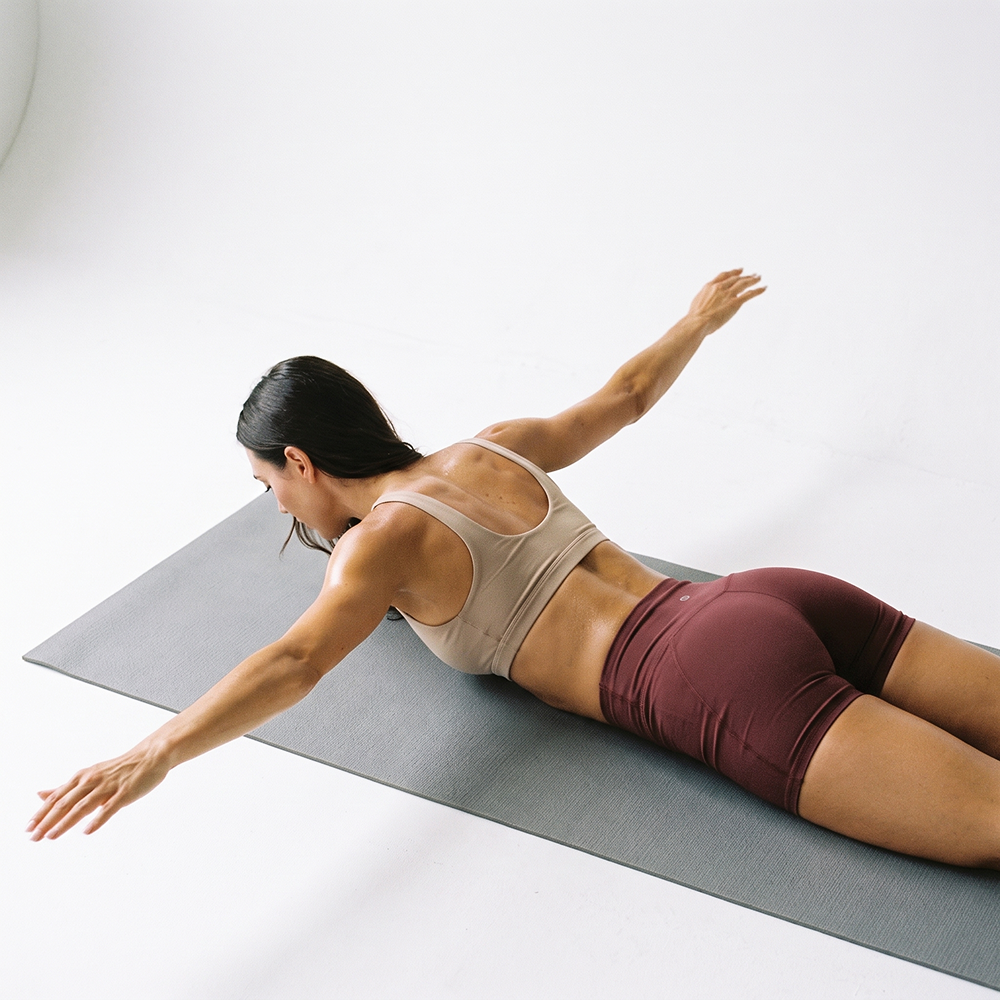
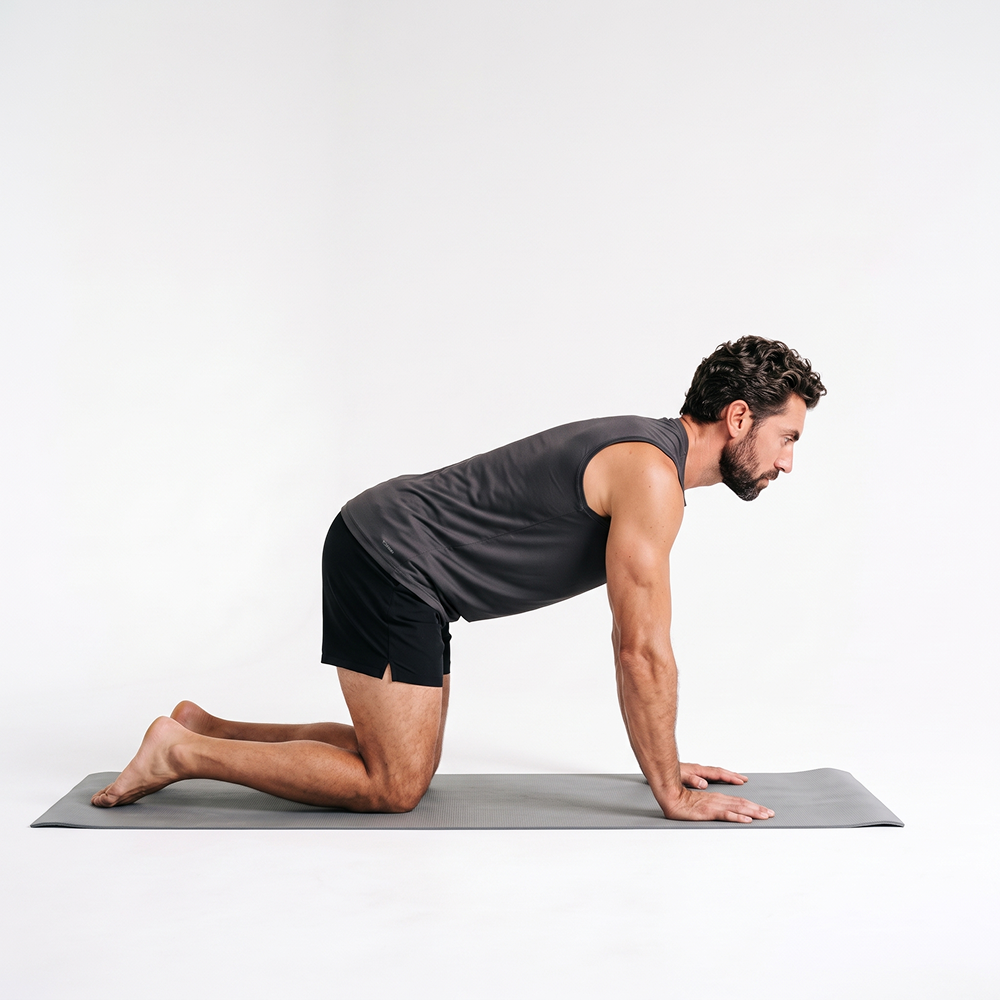
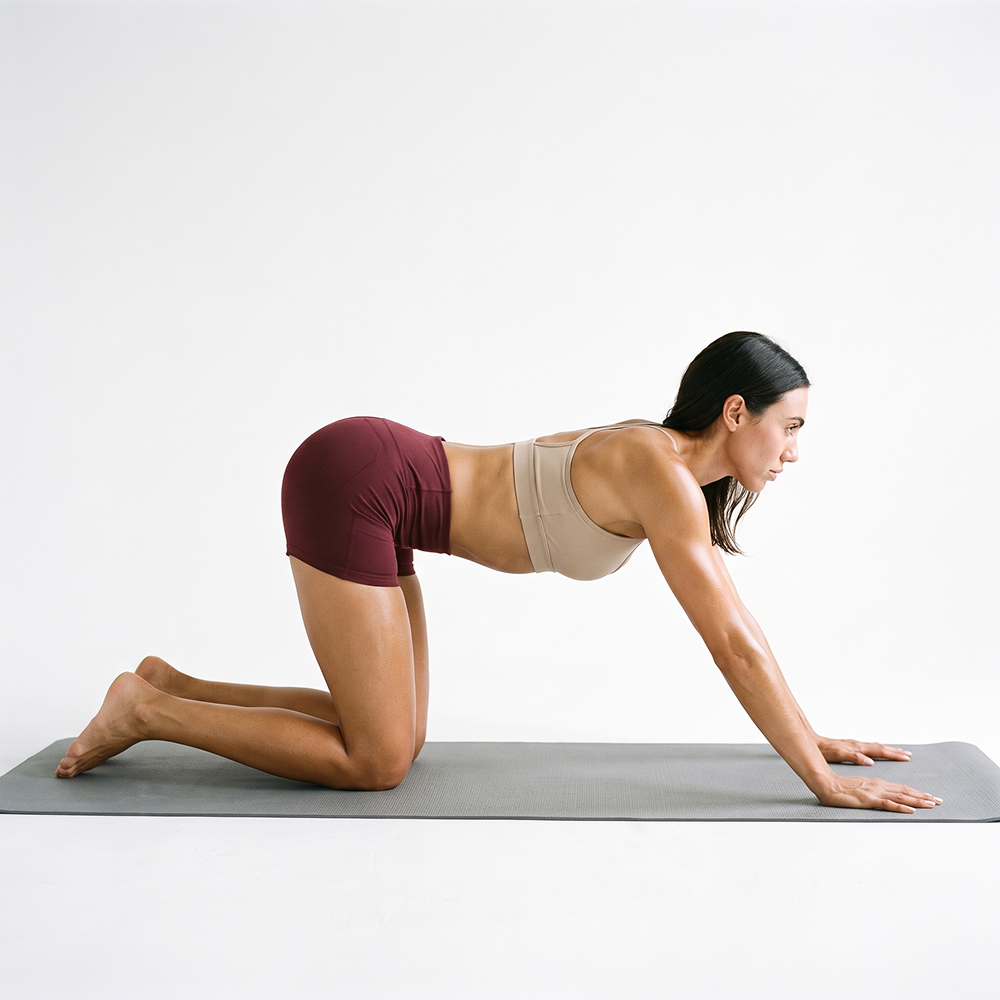
Watch this detail: Watch the shoulder blades glide while the elbows stay straight. If the elbows bend, reset and make the movement smaller. Use it to decide whether to continue, shorten the next movement or end the set.
The Apex photo captures one position; follow the steps for the full movement.
A quick form check
Use one slow repetition or a few seconds of the hold to answer three questions:
- Set up: Can you start in the position described in step one?
- Move or hold: Can you follow the Apex cue without rushing or holding your breath?
- Decide: Can you keep the same control for one more repetition or a few more seconds?
If the answer changes, end the set or make the movement smaller. This is a self-check, not a medical assessment or an app-generated form score.
How to do Scapular push-up
- Set up in a high plank, or use the knees for a lighter version, and keep the elbows straight.
- Let the shoulder blades draw together a little, then push the floor away to spread them.
- Apex cue: Think "wide upper back," not a shrug.
- Reset to a comfortable starting position before another repetition, or end the hold when you cannot keep the same shape.
If it does not feel controlled
| What you notice | Next move |
|---|---|
| The first attempt already changes your position | Make the range smaller or choose more support. The goal is a repeatable version, not the largest possible movement. |
| Your movement starts to change partway through | End the set at the last controlled repetition or second. Use a smaller target next time. |
| The exercise causes pain | Stop. If pain persists, seek individual advice from a healthcare professional. |
Where this exercise fits
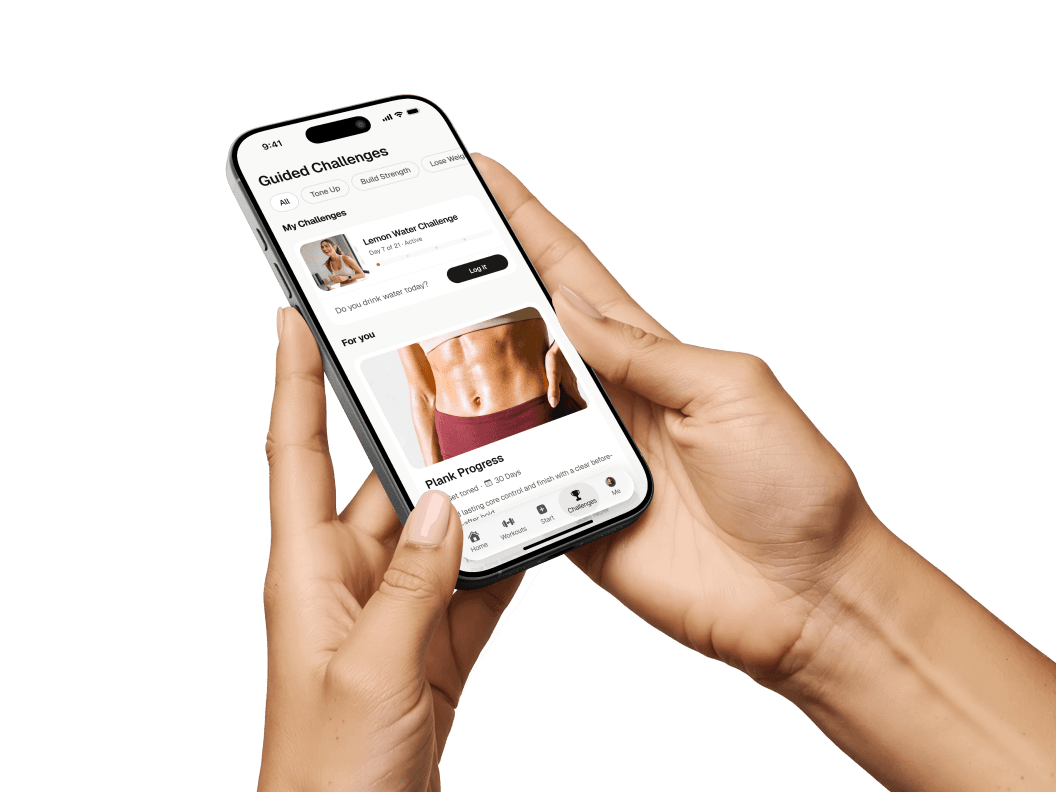
In Apex, this appears in a Push-up sets block of a guided workout.
Apex uses it in the Scapular Base workout at Foundation level: 3 × 8 reps. That is a target for this session, not a universal prescription for every person.

Get stronger
on your schedule.
Build your routine with short home workouts and progress you can track.

How to practice it
Use the same setup and comfortable range for a short set, then note when the movement starts to change. At a later session, adjust only one thing—range, support or target—while keeping the same form check. You can stop a set before technique changes; there is no need to chase a number at the expense of control.
What the evidence says
The app's cue is a practical movement instruction. Research on resistance exercise supports gradual, repeatable work in healthy adults, but does not prove that this exact shoulder, wrist or hip drill prevents injury or corrects posture.
Questions people ask about Scapular push-up
How many reps or seconds should I do?
In the linked Foundation workout, Apex uses 3 × 8 reps. Other sessions and levels can differ. End a set when the form check above changes; the number is a target, not a reason to force a painful movement.
Should I make the movement bigger each time?
Only if the same control remains and the movement stays comfortable. The research above does not show that forcing this specific drill prevents injury or corrects posture.
What to try next
For a nearby skill, compare Wall slides and Shoulder circles. Choose based on what changed in your last attempt, or return to the Scapular Base workout to see the movement in context.
Research and guidance used for this article
Exercise name, role, cue and photo: Apex app. The step-by-step description is an editorial draft of those materials and awaits professional review.
American College of Sports Medicine, 2026 resistance-training position stand.
MedlinePlus, “How to avoid exercise injuries.” Full URLs and claim limits are in Apex's internal editorial record.